

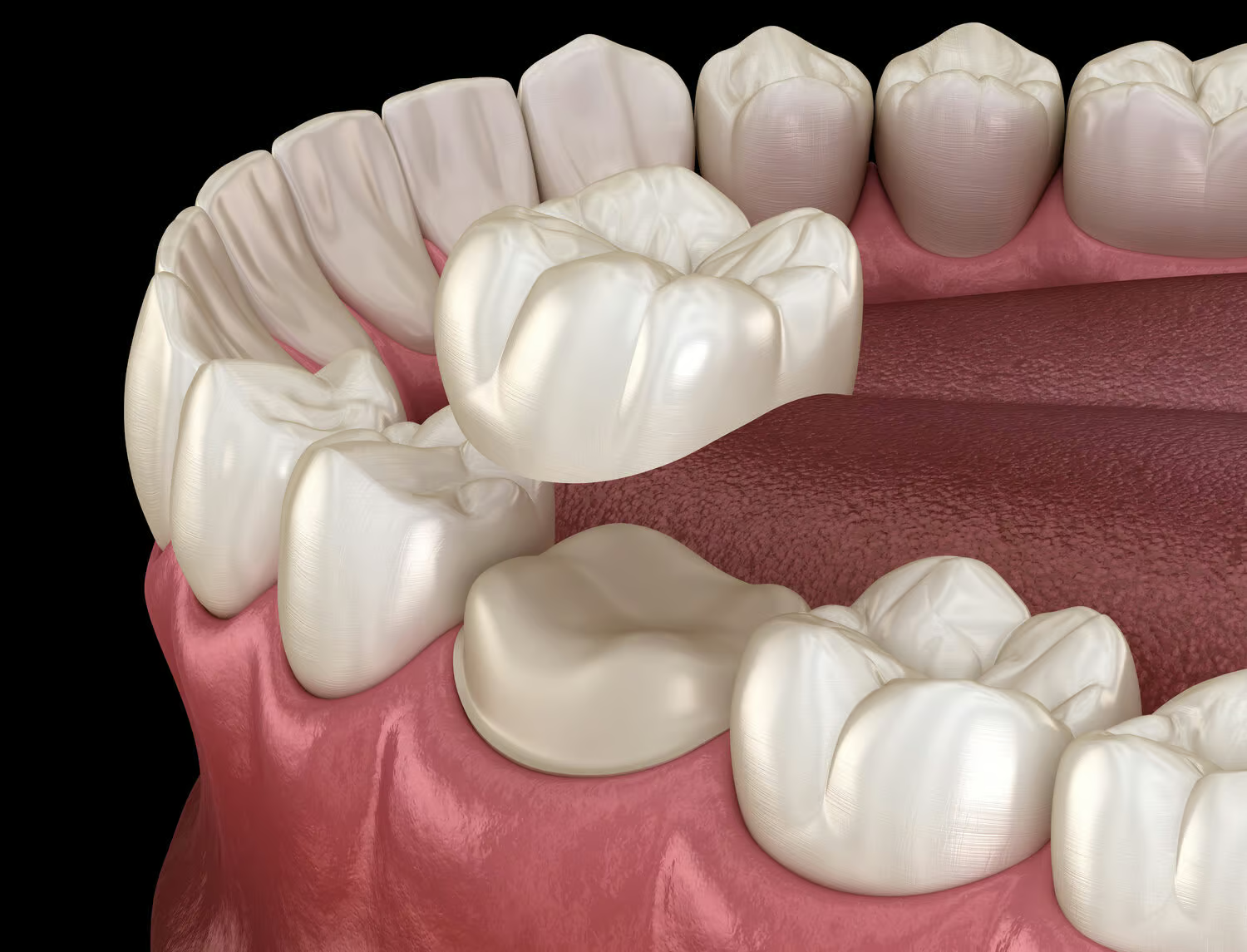
A dental crown is a custom-made cap that covers a damaged, weakened, or decayed tooth to restore its strength, shape, and appearance. Crowns are commonly used after a root canal, to protect a cracked tooth, to restore a tooth with a large filling, or to cap a dental implant. Today’s crowns are made from natural-looking materials like porcelain, and with modern technology, many can be designed and placed in a single visit — no temporary crown and no second appointment required.
If your dentist has recommended a crown, you probably have questions about why you need one, what the options are, and what the process involves. Here’s a complete guide.
Why Would You Need a Dental Crown?
A crown does more than improve appearance — it protects and strengthens a tooth that can’t be fully restored with a filling alone. Your dentist may recommend a dental crown if you have:
- A tooth that is cracked, broken, or badly worn
- A large cavity too big for a standard filling
- A tooth that has had a root canal and needs protection
- A dental implant that needs a natural-looking replacement tooth on top
- A misshapen or discolored tooth you want to restore cosmetically
What Are Dental Crowns Made Of?
Crowns can be made from several materials, each with its own advantages. Porcelain and ceramic crowns are the most popular because they closely match the color and translucency of natural teeth, making them ideal for visible areas. Other options include porcelain-fused-to-metal and all-metal crowns, which offer extra strength for back teeth. Your dentist will recommend the best material based on the tooth’s location, your bite, and your aesthetic goals.
The Traditional Crown Process
A traditional crown typically takes two visits. At the first, the dentist prepares the tooth by removing decay and shaping it, then takes an impression or digital scan and places a temporary crown. The impression is sent to a lab, which crafts the permanent crown over about two weeks. At the second visit, the temporary is removed and the permanent crown is bonded in place.
Same-Day Crowns: A Faster Alternative
Thanks to modern technology, many crowns no longer require two visits. With CEREC same-day crown technology, your dentist uses digital scanning to design your crown on a computer and mill it from a solid ceramic block right in the office — usually in about two hours. You walk out the same day with a permanent crown, skipping the temporary and the two-week wait. For a closer look at pricing, see our guide on how much same-day crowns cost.
How Long Do Crowns Last?
With proper care, most dental crowns last 10 to 15 years or longer. Brushing twice a day, flossing, avoiding habits like chewing ice or using your teeth as tools, and keeping up with regular cleanings and exams all help your crown last as long as possible. If a crown ever becomes loose or damaged, see your dentist promptly to protect the tooth underneath.
Are Crowns Uncomfortable to Get?
Getting a crown is a routine, comfortable procedure. The tooth is numbed beforehand, and most patients feel little more than mild pressure. For those who feel anxious about dental work, sedation options such as nitrous oxide are available to keep you fully relaxed throughout.